

If the kitchen is the only room out of use, ask before you pack
Your kitchen is gutted after a burst pipe or a fire, but the bedrooms, bathroom and living areas are fine. The insurer offers a serviced apartment. Before you accept, put a written request to the insurer asking whether a temporary kitchen delivered to the property can be funded under the temporary accommodation benefit instead. The answer depends on the wording of your Product Disclosure Statement (PDS) and the insurer’s assessment of your claim.
Ask in writing. Ask for the decision in writing. If a claim hasn’t been lodged yet, document the scope and dates from day one.
If no accommodation has been offered because the insurer considers the home still liveable, the request is still worth putting in writing. The line to use is this: without a working kitchen the home may not be fit to live in for the repair period, and an on-site kitchen resolves that and keeps the household in place, likely at lower cost than relocating. That framing stays within the “unable to be lived in” trigger that the temporary accommodation benefit relies on, without inviting the insurer to simply move the household out. Some policies also include a limited meal or additional living expenses allowance separate from accommodation, so ask the claims handler to point you to any such clause in your PDS.
What home insurance temporary accommodation typically covers
Home building policies generally include a temporary accommodation benefit that applies when the home can’t be lived in as a result of an insured event. NRMA’s customer FAQ frames it that way. AAMI’s PDS wording is covered below.
Whether a house with a damaged kitchen and otherwise habitable rooms meets the “unable to be lived in” test depends on the policy wording and the insurer’s assessment of the claim. That is the threshold question the request below is pitched at.
What they typically don’t
Standard policies don’t list “temporary kitchen hire” as a named benefit in the extracts cited here, so there is no automatic entitlement. The request has to be argued as a reasonable and necessary cost within the temporary accommodation benefit, and the insurer has to agree. Whether an on-site kitchen costs the insurer less than accommodation depends on the specific claim.
Why an insurer might agree: cost and non-cost reasons
The case for a temporary kitchen rests on two things: the comparative cost over the repair period and a set of practical benefits that reduce friction on the claim.
Indicative cost comparison: your claim will differ. The AAMI PDS caps hotel, motel or serviced-apartment stays at 4 weeks, after which the insurer may transition the household to residential accommodation of a similar standard in a similar location. For a kitchen rebuild running 8 to 12 weeks, the accommodation path is therefore roughly 4 weeks of serviced apartment, then 4 to 8 weeks of residential accommodation, plus the costs of relocating contents in and out and any pet boarding. A driveway-based temporary kitchen hired for the same period is almost always a materially smaller line item against the accommodation schedule. A written hire quote for your claim scope is available on request, so the claims handler has an actual figure to assess against the accommodation path. The real comparison depends on the accommodation rates in your location, the hire scope and the repair duration, and the insurer will cost it against their own schedules. Treat all of this as indicative only.
Non-cost benefits worth noting in the request.
- School, childcare and work routines continue without a change of address.
- Pets stay in the home rather than being boarded.
- Someone is on site daily for the builder, deliveries, trades and progress inspections.
- The property stays occupied and secure, which reduces vacant-property risk during works.
- Contents don’t need to be relocated twice.
Insurers are not required to weigh these factors, but a claims handler can note them on file alongside the cost comparison.
What the PDS actually says
Read your own PDS. The clause that matters for this request is the temporary accommodation benefit.
The AAMI PDS sets the benefit at reasonable and necessary costs up to 10% of the building sum insured per incident, with short-term hotel, motel or serviced apartment accommodation capped at 4 weeks. The phrase “reasonable and necessary” is the hook. A temporary kitchen on site can be argued as a reasonable and necessary cost that keeps the household in the home.
How a request proceeds
Copy this template into an email to the claims handler. Before you send it, ask us for a written quote to attach, so the insurer has an actual number to assess against the accommodation path.
Subject: Claim [number], request to consider on-site temporary kitchen
- Claim number: [number]. Date of loss: [date].
- The kitchen is the only room out of use. Bedrooms, bathroom, laundry and living areas remain habitable. I have confirmed, or will confirm once a builder is appointed, that the household can remain on site for the duration of the repair, and that no stages of the works, for example asbestos removal, floor sanding, or extended periods with power or water isolated, require the household to be relocated. If any stage does, I will raise short-stay accommodation separately.
- Without a working kitchen the home may not be fit to live in for the repair period. An on-site temporary kitchen resolves that and keeps the household in place, likely at lower cost than relocating. I am asking you to consider funding a temporary kitchen delivered to the property as a reasonable and necessary cost under the temporary accommodation benefit of my PDS. Please refer to [insert your PDS clause number and section here]. A quote is attached.
- Please provide the decision in writing, including the reasoning and the PDS clauses relied on.
- Under the General Insurance Code of Practice, I understand you must respond to a request for information within 10 business days and update me on the claim at least every 20 business days.
The 10 and 20 business-day timeframes in step 5 are the Code’s response and progress-update requirements. MoneySmart’s claim guidance is worth following alongside: keep receipts for any emergency spending and keep a written record of every contact with the insurer. If a builder has not yet been appointed, send step 2 on the understanding you will confirm the point with the builder once appointed. Some repair stages genuinely require the household to be out, even when only the kitchen is damaged. If the claims handler asks what the site needs, give the assessor footprint, power and water requirements — including that the pod runs on onboard water tanks topped up from an outdoor tap, not a plumbing connection, so no plumbing work is involved. We can supply these with the quote.
The role a temporary kitchen plays
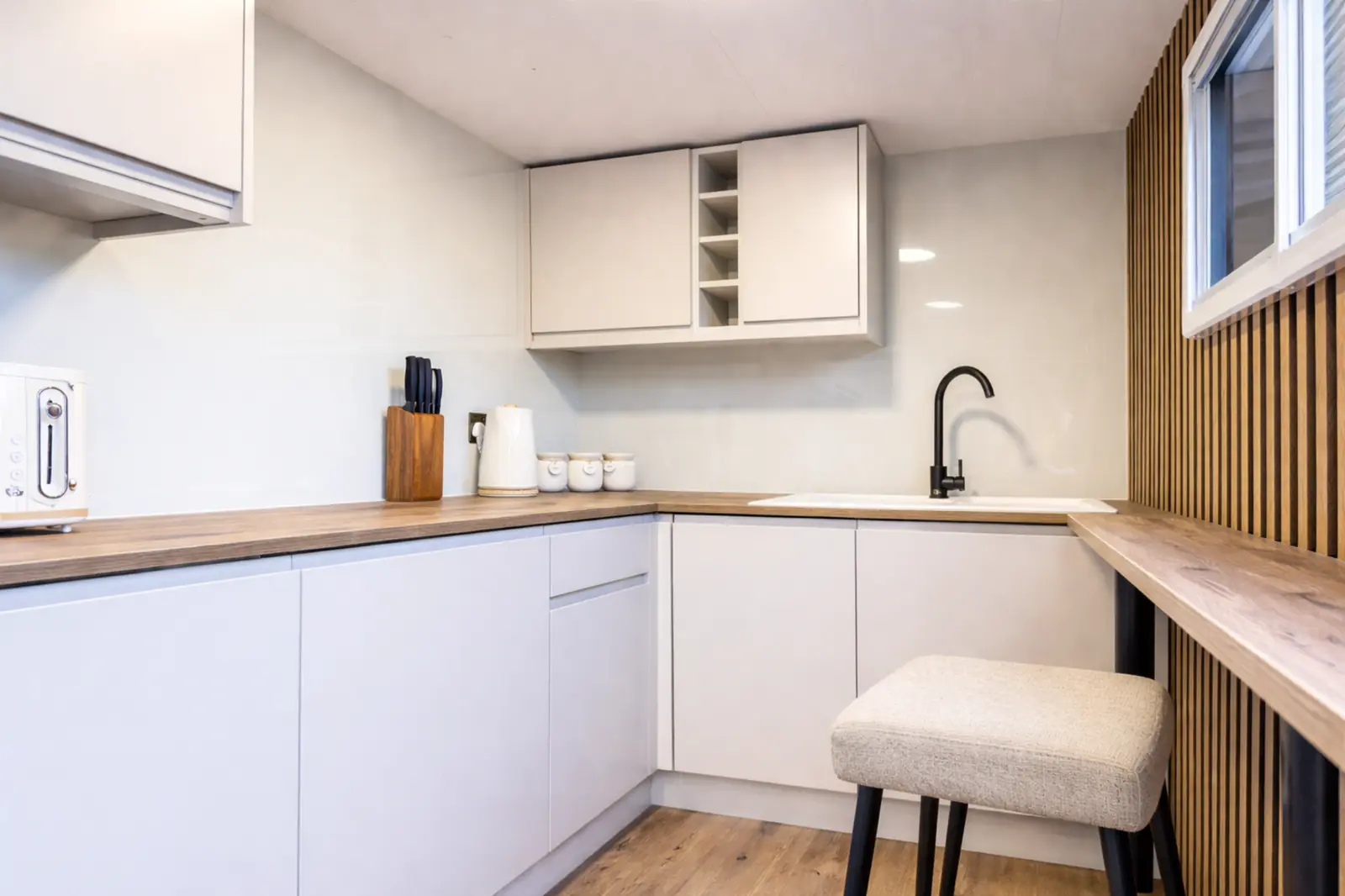
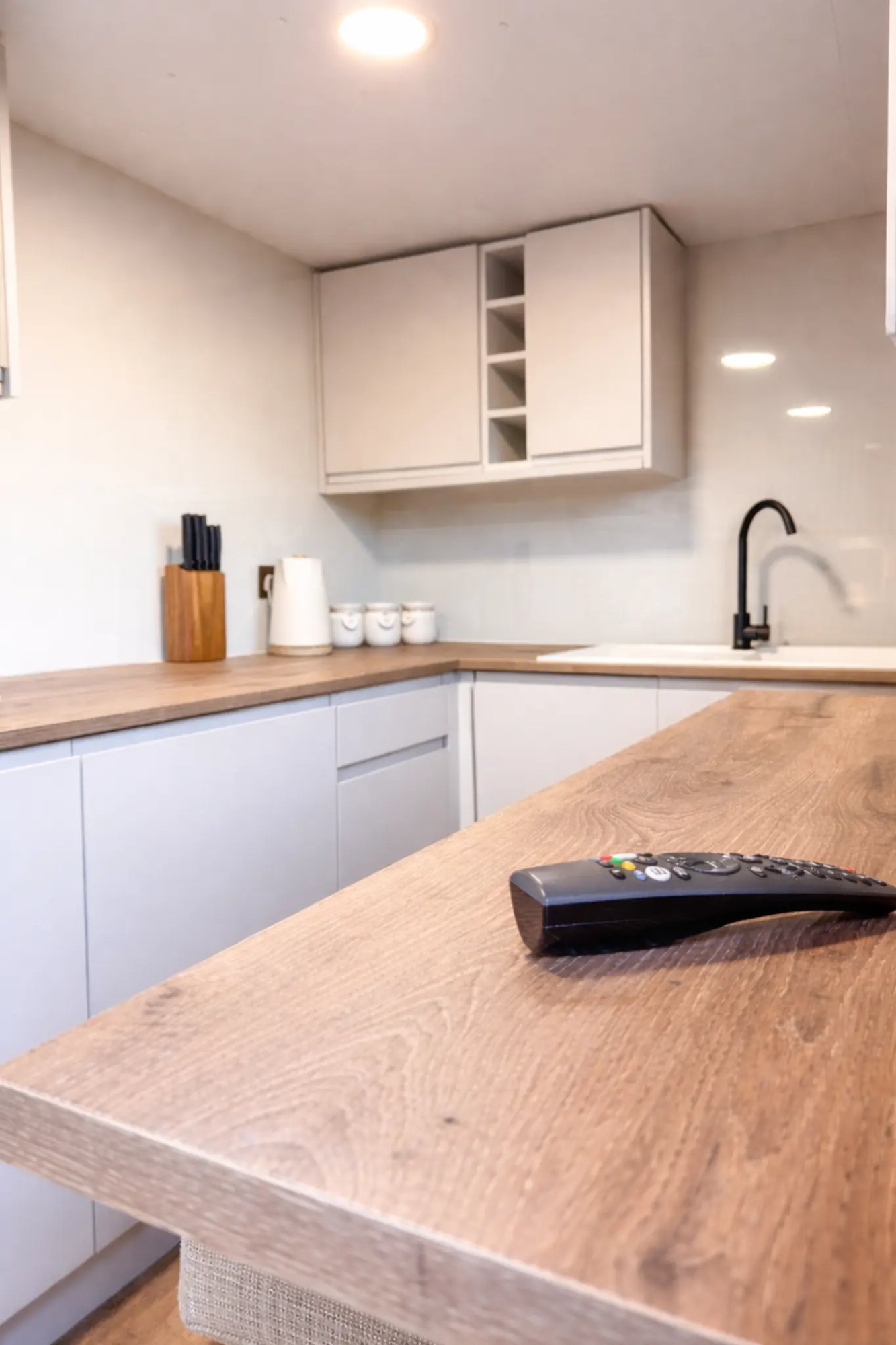
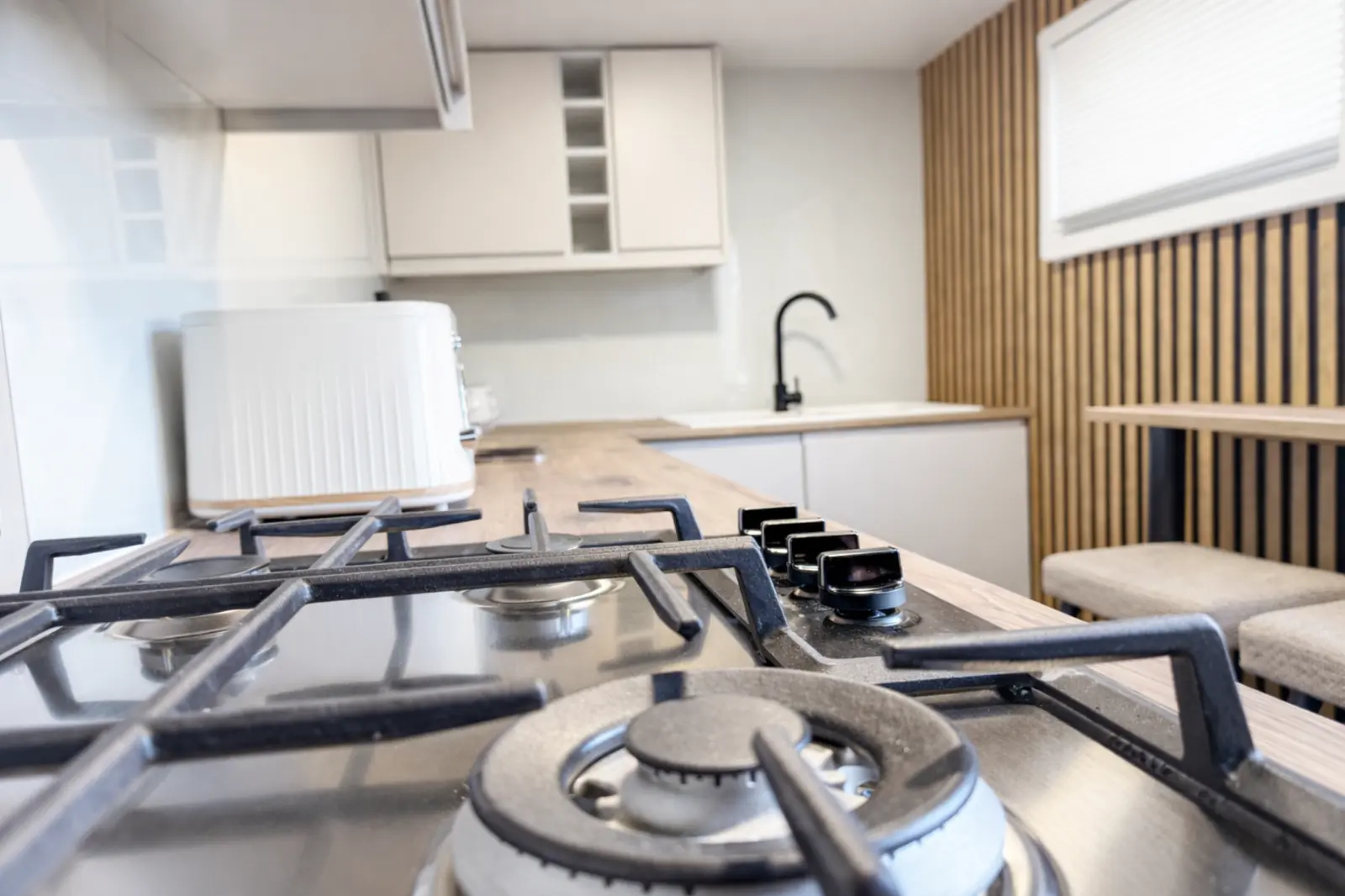
A temporary kitchen is a self-contained unit delivered to the driveway or a hardstand area. It runs from the household’s power — either an ordinary 10A outlet or a dedicated 15A circuit, depending on the pod variant — and from onboard water tanks topped up from an outdoor tap, so no plumbing work is required. Inside: a two-burner induction cooktop, oven, fridge, sink with hot water, dishwasher and dinette for four. It’s a functional cooking space during the repair, so the household doesn’t need to be relocated.
Whether this option suits a given claim is the insurer’s call, based on the PDS and the assessed scope. It isn’t automatic, but it is a reasonable question to put in writing.
AFCA and disputes
If the insurer refuses or ignores the request, you can escalate. First, lodge a complaint through the insurer’s internal dispute resolution (IDR) process. If IDR doesn’t resolve it, the Australian Financial Complaints Authority (AFCA) is free and independent, and reviews home insurance disputes.
Accommodation caps can run out before repairs are finished, and that is a practical reason to raise the on-site option early. In one AFCA published determination, the policyholder’s temporary accommodation limit under the policy was $38,936.70, and AFCA ordered the insurer to pay an additional $7,200 after the limit was reached before repairs were complete. That determination was about an accommodation cap being exhausted, not about temporary kitchens. The connection worth drawing is simply this: where a repair is likely to run long, a lower-cost on-site option can stretch the same benefit further and reduce the risk of the household running into the cap before the kitchen is finished. The determination doesn’t require an insurer to agree to a temporary kitchen.
Bottom line
If the kitchen is the only room out of use, ask the insurer in writing whether an on-site temporary kitchen can be funded under the temporary accommodation benefit of your PDS. Quote your own PDS wording. Ask for the decision in writing. Reference the Code’s response timeframes. If the answer is no and you disagree, IDR then AFCA.
Treat the request as a question the insurer has to consider on the facts of your claim and the words of your policy, not as a guaranteed outcome.
For the broader picture of what to document and when to lodge, see how to prepare a home insurance claim for kitchen damage. For an adjuster-side explainer of what home insurance policies typically cover for kitchen damage, see kitchen damage claims: what insurance policies typically cover.