

First hour: what to do before you call anyone
Make the area safe. Kill power at the switchboard if water has reached appliances or wiring. Shut the water at the isolation valve under the sink or at the mains.
Don’t start cleaning. MoneySmart’s claim guidance is direct: contact the insurer as soon as possible, take photos of the damage before cleaning up, keep damaged items until the insurer says otherwise, and keep receipts for any emergency spending. Photograph everything. The cabinet carcasses, the underside of the benchtop, the floor, the ceiling below if you’re on an upper level, the appliance that failed.
If the damage is fire or smoke, Youi’s kitchen fire guidance is worth following: make the area safe, don’t attempt cleanup of smoke or fire residue yourself, document everything, and lodge the claim before arranging any repairs. Smoke residue is corrosive. DIY cleaning can make the smoke damage harder to assess.
What kitchen policies typically cover
Home building policies usually respond to sudden, accidental damage. Burst flexi hoses, dishwasher leaks, range hood fires, a fridge that fails and floods the floor. Contents cover usually picks up the loose items: crockery, food spoilage from a fridge failure, small appliances.
Most home building policies also include temporary accommodation cover when the home is unfit to live in, commonly capped at a percentage of the building sum insured or a set period. The AAMI Home Building Insurance PDS (applies to policies commencing on or after 24 January 2025) pays up to 10% of the building sum insured per incident, with short-term stays in a hotel, motel or serviced apartment capped at 4 weeks. The optional Complete Replacement Cover raises this to reasonable and necessary costs for up to 52 weeks. Every other insurer sets its own limits. Read your own PDS.
What they typically don’t
Gradual damage is the big one. A slow leak under the sink that’s been rotting the kickboard for two years usually isn’t covered. Wear and tear on cabinet hinges, benchtop scratches and general deterioration sit outside most policies.
Betterment can be contested. If your 15-year-old laminate benchtop is destroyed, the insurer may offer like-for-like laminate rather than the stone upgrade you’d prefer. You can pay the difference, but the scope stays what the policy allows. Unapproved renovation work and non-compliant plumbing can also knock out cover.
What the PDS actually says
Read your Product Disclosure Statement. It’s the only document that matters for your specific claim. Look for the definitions of “sudden and accidental,” “escape of liquid,” “unfit to live in,” and the temporary accommodation section.
Whether a home with a damaged kitchen but otherwise habitable rooms qualifies as “unfit to live in” depends on the policy wording and the insurer’s assessment. NRMA’s customer page frames it that way, and the policyholder should ask the insurer directly and get the answer in writing. This matters a lot for kitchen claims. A functioning bathroom and bedrooms don’t automatically disqualify you. They don’t automatically qualify you either.

How a claim proceeds
Lodge the claim. Under the General Insurance Code of Practice, within 10 business days of receiving a claim the insurer must either decide it or tell the policyholder what further information is needed, whether a loss assessor will be appointed, and the estimated time to a decision.
The Code requires insurers to update the policyholder on claim progress at least every 20 business days and to make a final decision within four months, except in exceptional circumstances such as a declared catastrophe. The Code timeframe is a decision-making floor, not a repair schedule. The repair itself is a separate timeline — plan around cabinet lead times, stone templating windows, and electrical and plumbing sign-offs.
After the decision, the two settlement paths are cash settlement or a managed repair through the insurer’s builder network. Read the PDS section on how claims are settled — the specific rights, obligations and defect liability under each option depend on your policy wording, not on any general rule about which suits which claim.
The temporary kitchen question
Temporary accommodation is where most kitchen claims get stuck. The kitchen is out for as long as the repair takes. The rest of the house works. Do you move to a serviced apartment, or stay put with a temporary kitchen on site?
Suncorp describes a typical staged approach. Short-term hotel or serviced apartment stays for the first weeks, then a move to residential accommodation for longer repairs. That works for whole-of-house damage. It’s expensive and disruptive for kitchen-only claims where the bedrooms, bathroom and laundry are fine.
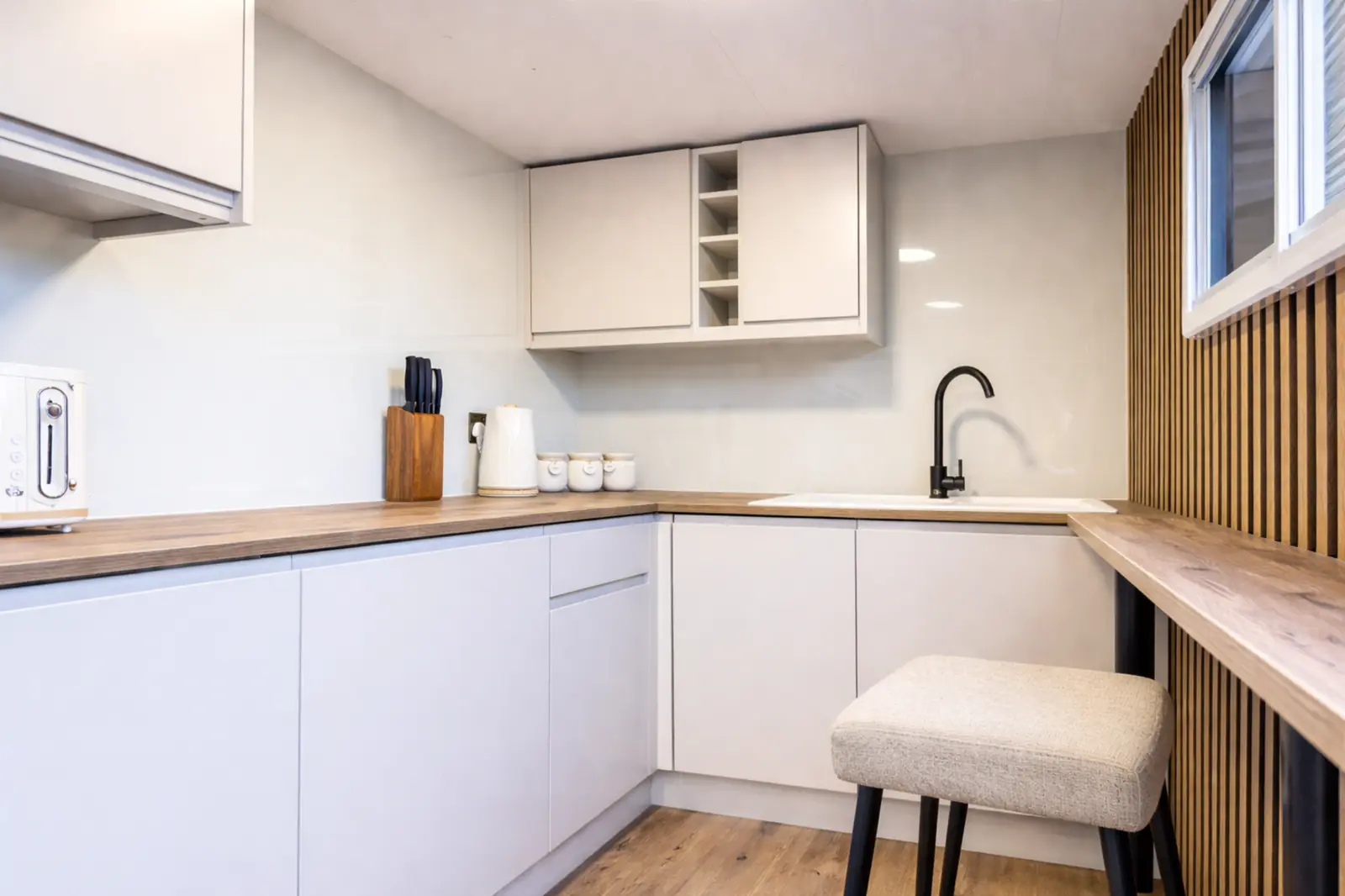
The alternative is staying in your home while the kitchen is repaired, with a self-contained temporary kitchen delivered to the driveway or a hardstand area. Two-burner induction hob, 27L fan-forced oven, 175L fridge freezer, sink with a hot water tap, built-in dishwasher, washing machine, and dinette seating for four. Onboard 90-litre fresh and 110-litre grey water tanks, so no plumbing connection is made to the household’s water system. You keep your bedrooms, your bathroom, your routine, the kids’ school run.
Before you assume this is or isn’t covered, put the question in writing. Whether it costs the insurer less than accommodation depends on the claim, which is why the request needs to go on file in writing.
AFCA and disputes
If the insurer denies the claim, under-scopes the repair, or drags past the Code timeframes, you have options. Complain to the insurer’s internal dispute resolution team first, in writing. If a claim is delayed unreasonably, the policyholder can complain to the insurer first and then to AFCA, which is free and independent.
AFCA can make binding determinations up to their monetary limits. They handle scope disputes, cash settlement adequacy, delay complaints and temporary accommodation disputes. Keep every email, every assessor report, every quote. Documentation wins these.
Bottom line
Photograph before you touch anything. Read your PDS, not a blog post about someone else’s PDS. Get the “unfit to live in” question answered in writing. Ask about alternatives to being moved out before you sign a serviced apartment lease. Track the Code timeframes and escalate to AFCA if the insurer misses them.
Kitchen claims are mostly about scope and duration, not the initial approval. The kitchen will get repaired. The question is where you live while it happens and who pays for what.
For the exact wording to put to your insurer when asking about an on-site temporary kitchen instead of accommodation, see a template homeowners can use. For a deeper reference on what home insurance policies typically cover for kitchen damage, see kitchen damage claims: what insurance policies typically cover.
Mid-claim and the kitchen’s out? A temporary kitchen on the driveway can be the alternative to being moved out. Email hello@temporarykitchenco.com.au with your claim number, insurer, site address, scope and expected duration, or call 03 9124 9853. Greater Melbourne.